Dev Log #13: Designing the Pulse: Tarot Cards, Darkness, and Total Permadeath
Every roguelite lives or dies on its core decision. Hades has doors. Slay the Spire has paths. Binding of Isaac has items.
Bound to Rot has the Pulse.
This post is about why I built the entire game around a deck of tarot cards and a light you can’t afford to leave.
What the Pulse Actually Does
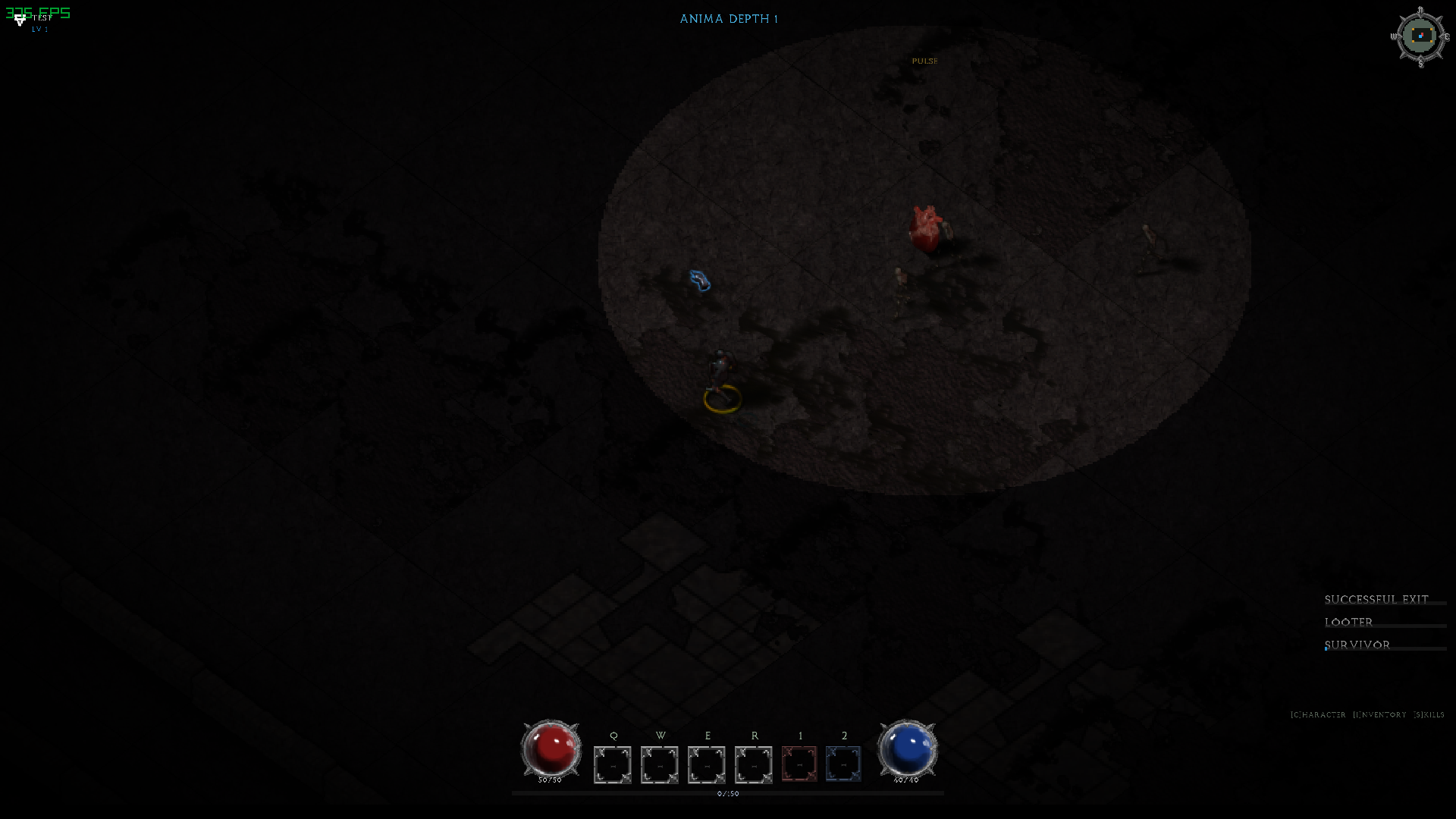
Inside the Anima, the Pulse is your anchor: a source of light sitting at the center of each room. Step outside its radius and escalating darkness damage starts eating your vessel. It is simultaneously your safety line and your leash.
Clear every enemy in a wave and two things happen. First, the reward promised by your previous card drops as ground loot around the Pulse. Second, the Pulse becomes interactive. Click it and it deals a four-card Major Arcana spread, face down, flipping each card one by one.
Each card carries three things:
- A direction: descend deeper, hold your ground, ascend toward the light, or return to the Hub with everything you’re carrying
- An effect: a boon or bane that reshapes the next room
- A reward that stays pending until you clear the next wave at your chosen depth
Hover a flipped card and a full tooltip breaks down exactly what you’re gambling with. Then you pick, the Pulse arrives in the next room, and the next fight begins before you’ve even finished looting your thoughts.
Rigged, But Only in Your Favor (Sort Of)
Here’s the rule that makes the whole system work: the spread always contains The World, which lets you walk away, and always contains at least one card that lets you descend deeper.
You can always leave. You can always push on. There is never a run where the cards trap you.
That constraint was deliberate. If the deck could ever offer only bad options, deaths would feel stolen rather than earned. In Bound to Rot, every death is a choice you made three rooms ago, when you looked at The World, thought about the Legendary you just found, and flipped the next card anyway.
Depth drives monster level and reward quality. Deeper means harder encounters and better loot, which means the pressure to continue scales exactly as fast as your confidence does.
Darkness Is the Real Enemy
Monsters are honest. They telegraph, they swing, they die. The darkness doesn’t fight you, it just waits.
Linger too long outside the light and rot sets in. That turns time itself into a resource you spend on every extra room, every last crate, every “one more flip.” Extraction shooters proved players will sweat over a timer. I wanted an ARPG where the timer is thematic: you are literally an angel in a body that is dying from the moment it arrives.
The soul endures. The vessel does not. The deeper you fall, the faster it rots.
Losing Everything, On Purpose
Death inside the Anima is permanent and total. All gear carried during the run, all depth progress, gone. Your character returns to the Hub empty-handed.
But not everything dies. Your stash remains, along with account-wide progress like the deepest point ever reached. New vessels unlock by piercing the Veils of the Anima: reach Depth 10 and earn the darkness-resistant Myronian warrior, reach Depth 20 for the Theran fighter. Surviving what killed you is what earns the body that resists it.
So permadeath here isn’t punishment for its own sake. It’s the engine that makes a common drop at Depth 2 feel different from the same drop at Depth 30, and it’s the reason flipping that fourth card will always mean something.
Play It Yourself
The whole loop is functional right now: descent, tarot gambles, permadeath, extraction, itemization across five rarity tiers. The Steam page is live, and wishlists are how this game gets seen. If the idea of a deck of cards deciding your fate sounds like your kind of terrible decision, go press the button.
👉 Wishlist Bound to Rot on Steam
Follow along:
See you in the next one,
- Stamatios